Wedding ceremony planning center
Wedding Ceremony Script Guide
Plan a complete wedding ceremony script with a clear order of service, officiant wording, non-religious options, and friend-officiant guidance.
Quick answer
A useful wedding ceremony script is both spoken wording and a run-of-show. It identifies entrances, the welcome, readings or rituals, declaration of intent, vows, rings, pronouncement, signatures when required, and the recessional. Build that order before polishing transitions, write short sentences for the officiant, and rehearse movement as well as speech. Legal requirements vary by location, so the couple and officiant must confirm the authorized person, witnesses, required wording, license, and filing process with the responsible local authority.
Reviewed by Vows on Wedding Editorial Team · Updated
A wedding ceremony script is both spoken language and a run-of-show. It tells the officiant what to say, but it also marks entrances, transitions, readings, vows, rings, the legal declaration, and the recessional. A useful script should be easy to speak and easy for the couple and vendors to follow.
The guides below separate the major planning decisions: first establish the ceremony order, then choose the overall wording style, and finally adapt the script for the person officiating. This keeps the ceremony personal without leaving a first-time officiant to improvise under pressure.
Build a wedding ceremony script from the run of show
Start the wedding ceremony script with legal facts
Before choosing readings or polishing a welcome, confirm what the ceremony must include where the marriage license is issued. Requirements vary by location and officiant status. Ask who may solemnize the marriage, whether witnesses are required, which declaration of intent must be spoken, how names must appear, and who returns the license. Record the answers in a separate production note so legal wording is never confused with optional storytelling.
A friend officiant should not rely on a generic website to interpret local law. The couple or officiant should contact the relevant clerk or licensing authority and keep the official instructions. Once the required elements are known, the creative wedding ceremony script can be built around them. This sequence protects the couple from discovering after the rehearsal that a beautiful script omitted a necessary declaration or placed a signature step with the wrong person.
Map entrances, speaking roles, and transitions
List every ceremony beat in order: guest seating, processional groups, officiant welcome, acknowledgments, couple story, readings or music, declaration of intent, vows, rings, ritual, pronouncement, kiss, presentation, and recessional. Beside each beat, name the person responsible and the physical action that begins it. This turns the wedding ceremony script into a usable run-of-show rather than a stack of paragraphs.
Transitions deserve special attention because they are where first-time officiants often improvise. Write one sentence that explains what is happening next and, when needed, one stage direction in brackets. For example, a reading transition can identify the reader and cue them to approach. A ring transition can tell the couple to face each other and the ring bearer to step forward. Clear cues reduce visible uncertainty without making the ceremony feel mechanical.
Choose timing before adding optional material
Create a base ceremony containing only the essential welcome, declaration, vows, rings, and pronouncement. Time it aloud. Then add the couple story, readings, music, rituals, and participation one by one. A non-religious ceremony often feels complete in fifteen to twenty-five minutes, but the right duration depends on tradition, accessibility, venue rules, weather, and how many people are speaking.
Use time as an editing constraint, not a measure of meaning. A short ceremony can feel personal when its language is specific and its transitions are calm. A longer service can feel focused when each reading or ritual performs a distinct role. If two sections express the same idea, keep the stronger one. Protect extra time for walking, microphone handoffs, emotion, laughter, and applause; a page read silently always underestimates the live event.
Write a wedding ceremony script people can speak
Use an officiant voice, not an essay voice
Spoken ceremony language benefits from short sentences, concrete verbs, and visible pauses. The officiant should sound as if they are speaking to the couple and room, not reading a paper about marriage. Replace long abstract passages with one clear idea at a time. Read each paragraph while standing. If the meaning arrives only at the final clause, move the main point earlier or divide the sentence.
The couple story should be selective. Choose two or three moments that reveal a pattern in the relationship, then connect that pattern to the commitment being made today. Avoid a complete dating history, a list of achievements, or anecdotes that make one partner the punch line. A strong wedding ceremony script gives guests enough context to recognize the couple while keeping the emotional center on the choice they are making.
Format stage directions so they cannot be spoken accidentally
Separate production notes visually from spoken text. Use brackets, bold labels, spacing, and page breaks. Mark where the officiant moves, when the couple turns, who holds the rings, and when a reader approaches. Add phonetic spellings for names and places. Keep emergency notes—such as a shortened outdoor version—on a clearly labeled page rather than inside the main paragraph flow.
Print the final wedding ceremony script in a large, high-contrast typeface with generous margins. Avoid leaving a sentence split across pages. Number the pages and place them in a quiet binder that does not glare in photographs. The officiant can highlight only operational cues and the opening words of major sections. Too much highlighting becomes another form of clutter and makes it harder to recover after looking up.
Protect personal vows and sensitive stories
Decide whether the officiant will see the personal vows. They may need only the approximate length and a cue for who begins. If the vows contain private material, keep the copies with the couple or planner. For the officiant’s remarks, obtain explicit approval for stories involving grief, health, family conflict, former relationships, finances, children, or identity. Surprise should come from wording, not from exposing information.
Create a simple approval process: one shared outline, one complete review by the couple, and one locked final file. Last-minute edits should be limited to corrections or essential logistics. Repeated revisions by relatives and wedding-party members can dilute the couple’s voice and introduce conflicting versions. The date and version number belong in the footer of every rehearsal copy.
Rehearse and deliver the wedding ceremony script calmly
Run a table read before the venue rehearsal
The officiant should read the complete script aloud alone, then with the couple. Time each section and mark difficult transitions. Confirm pronunciation, titles, cultural terms, and the exact presentation of the couple’s names. Listen for repeated ideas and formal language that feels unnatural. This table read is the best time to shorten paragraphs because the venue rehearsal should focus on movement and cues rather than line editing.
Rehearse movement, sound, and handoffs
At the venue, practice where the officiant stands, how the wedding party enters, where readers wait, how microphones move, and who carries the rings. Check whether the couple blocks the guests’ view and whether the officiant can step aside for the kiss. If there is live music, establish visual cues for starts and stops. A technically clear wedding ceremony script supports these actions with brief stage directions at the exact moment they are needed.
Prepare a failure-safe ceremony kit
Bring two printed copies, a digital backup, water, tissues, a pen for license tasks, and contact information for the planner and venue. If the ceremony is outdoors, secure pages against wind and prepare a shortened version for weather. The officiant should know which optional section can be removed without affecting legal requirements or the emotional arc. A backup plan creates calm because no one must invent priorities during a delay.
Use the focused guides in planning order
Start with the ceremony-order guide to build the sequence. Choose the simple or non-religious script guide based on tone and tradition, then use the friend-officiant guide if the speaker is new to the role. The generator can combine approved details into a first draft, but the couple and officiant must still verify law, consent, pronunciation, privacy, and timing. Treat every template as editable scaffolding rather than authority.
Sources and editorial references
These references support specific conventions or jurisdiction examples. They do not replace advice from the authority responsible for your ceremony or circumstances.
- GOV.UK: Plan your marriage or civil partnership ceremony
An official England and Wales example showing that witnesses, authorized people, wording, and signing requirements depend on the ceremony type and jurisdiction.
- USAGov: Marriage certificates and licenses
A United States government starting point that directs couples to the state or local office responsible for license and certificate requirements.
Four focused guides
wedding ceremony script questions, answered in depth
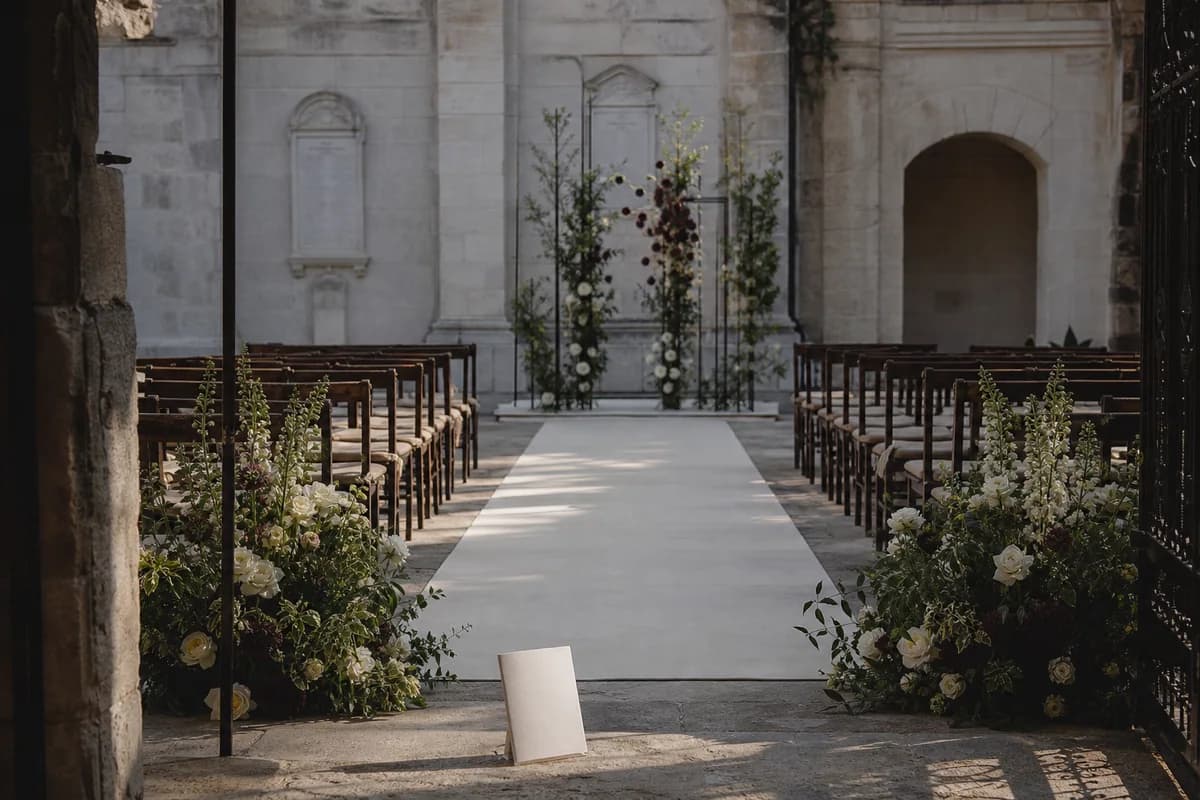
Wedding Ceremony Order Guide
Build a wedding ceremony script in order, including the processional, welcome, intent, vows, rings, pronouncement, and recessional.
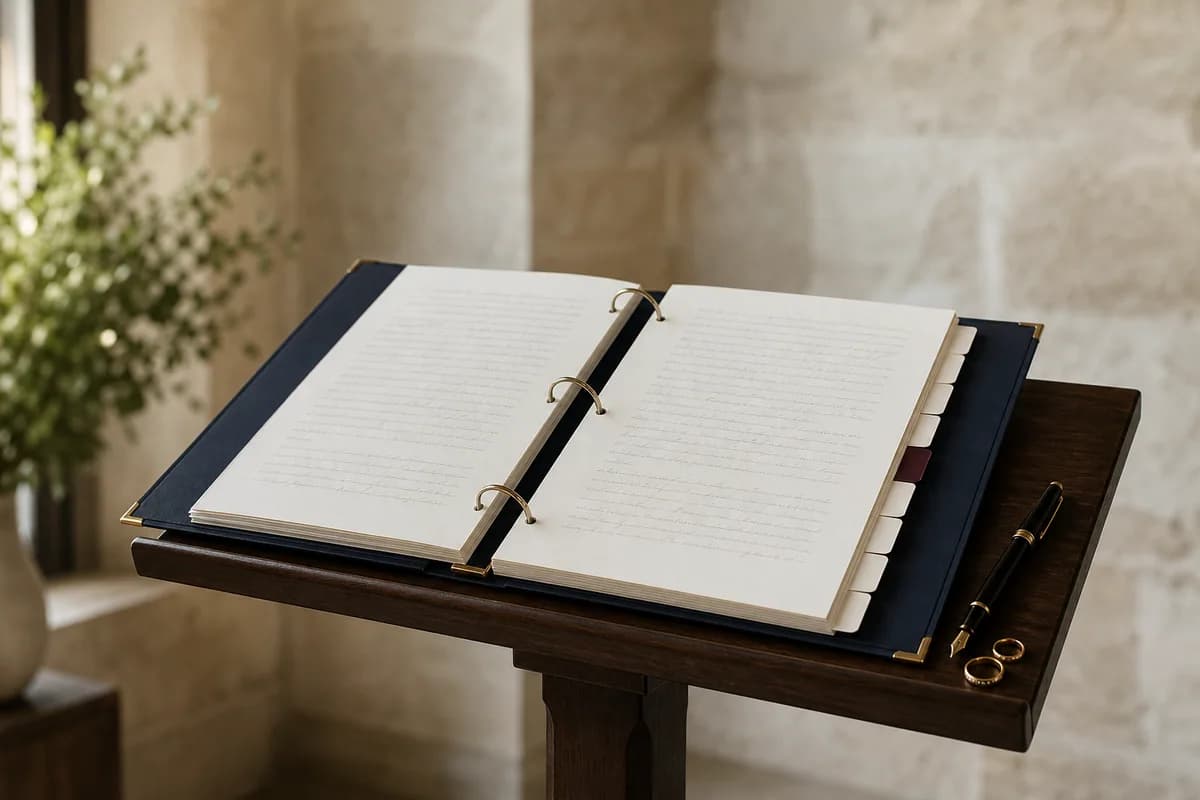
Simple Wedding Ceremony Script
Use a simple wedding ceremony script with warm officiant wording, clear stage directions, and options for personal vows, rings, and the pronouncement.
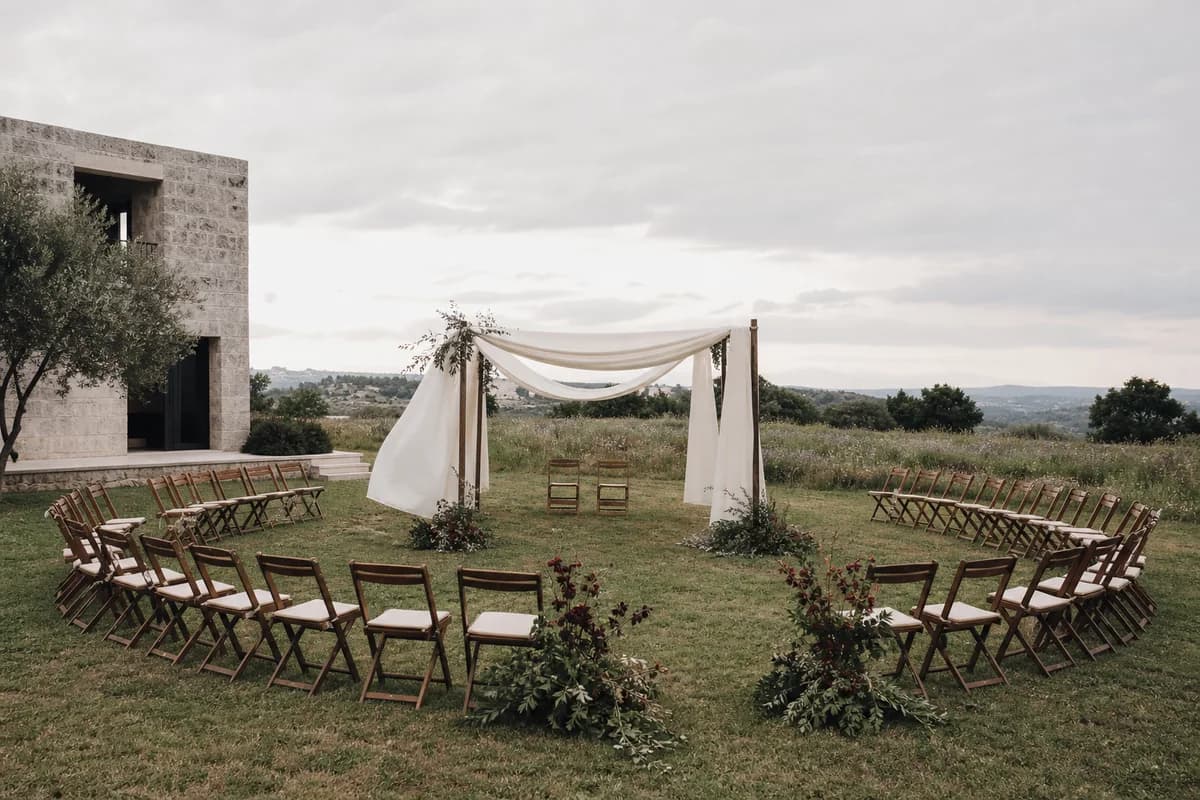
Non-Religious Wedding Ceremony Script
Create a non-religious wedding ceremony script with inclusive language, sample transitions, reading ideas, and a complete secular structure.
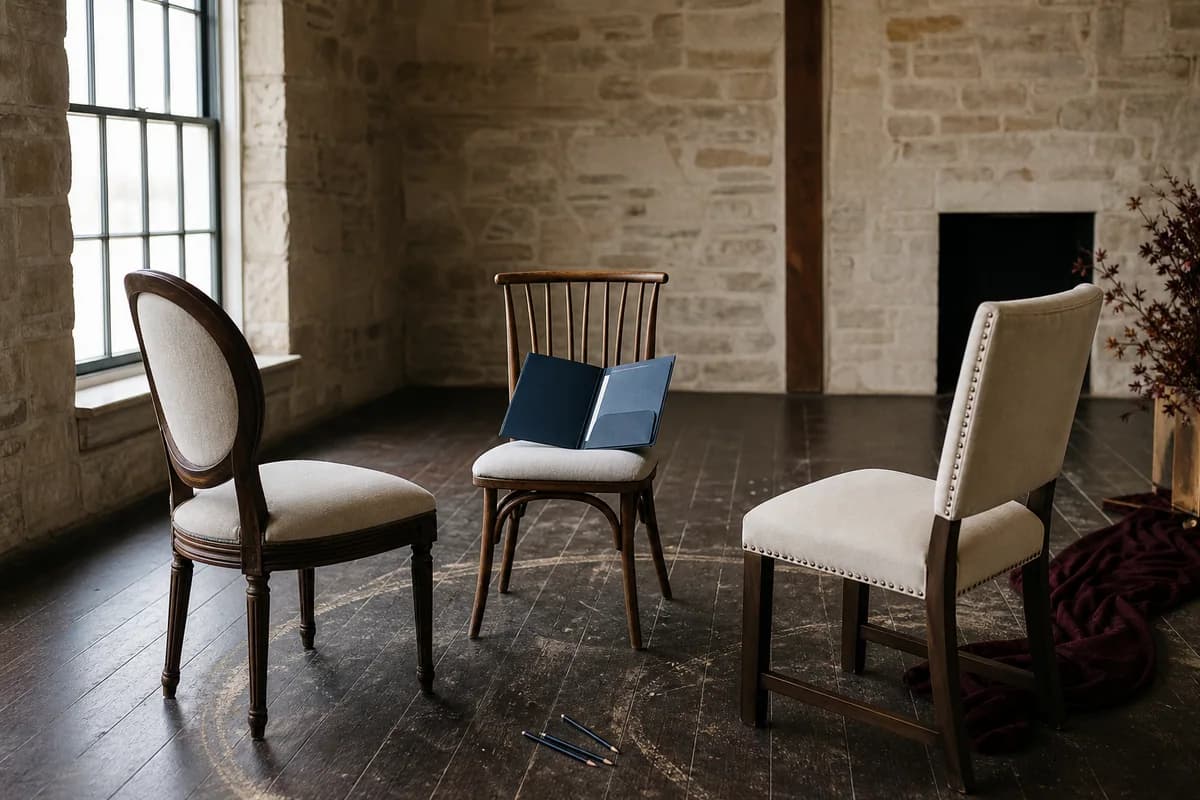
Friend Officiant Wedding Script Guide
Help a first-time friend officiant prepare a legal, personal wedding ceremony script with an easy-to-deliver rehearsal and ceremony copy.
wedding ceremony script frequently asked questions
What is included in a wedding ceremony script?
A complete script normally includes stage directions, welcome, remarks about the couple, readings or rituals, declaration of intent, vows, rings, pronouncement, and recessional.
How long should a wedding ceremony be?
Many non-religious ceremonies run 15 to 25 minutes. Religious services and ceremonies with several readings or rituals may take longer.
Can a friend use a sample officiant script?
Yes, after confirming local legal requirements. The friend should personalize the welcome and couple story, mark stage directions, and rehearse the final version aloud.