Wedding Ceremony Script for Friends
Help a first-time friend officiant prepare a legal, personal wedding ceremony script with an easy-to-deliver rehearsal and ceremony copy.
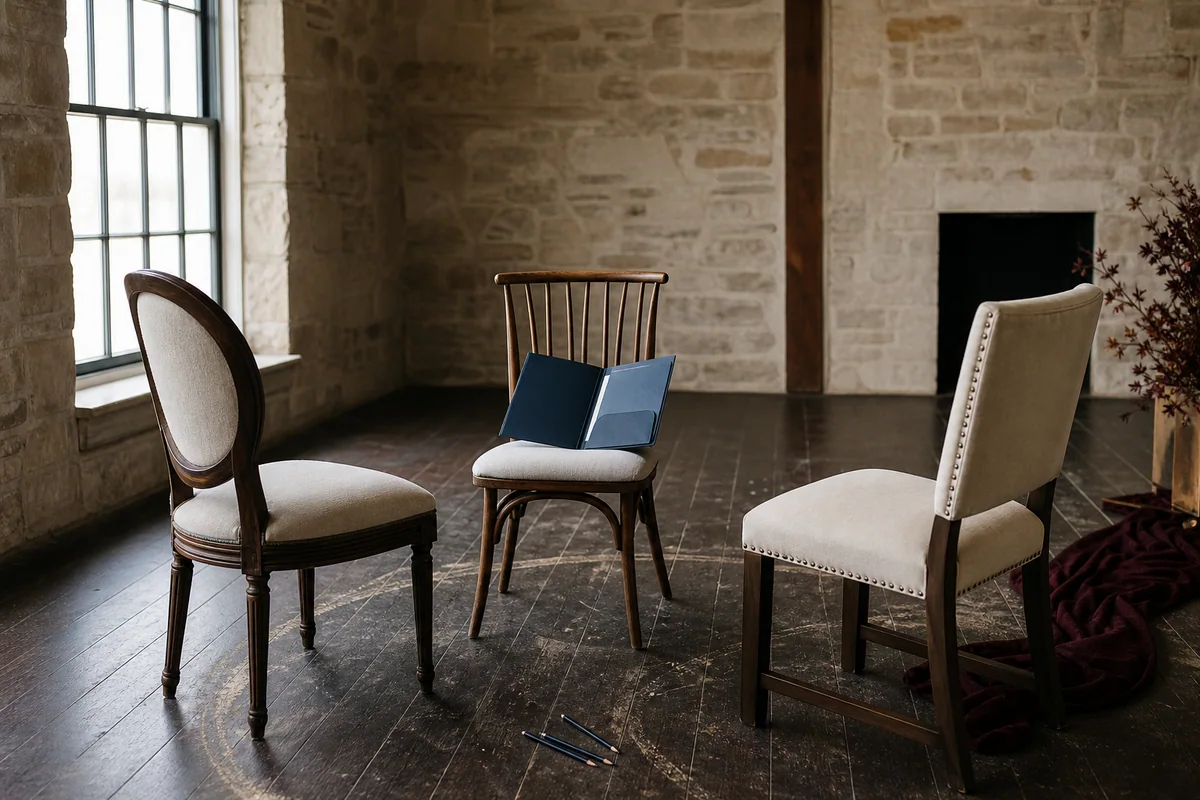
Friend-officiant wedding ceremony script responsibilities
Separate the wedding ceremony script from the friendship speech
A friend brings history and trust, but a wedding ceremony script also requires legal verification, balanced storytelling, stage directions, and calm delivery. The friend should interview both partners, obtain approval for every personal story, and avoid becoming the main character. Build the sequence before writing jokes or reflections, then create a rehearsal copy that distinguishes spoken words from physical cues. This guide helps a first-time officiant protect the couple’s privacy while using the genuine warmth that made them the right person for the role.
A friend officiating a wedding needs more than a heartfelt speech. They need a legally informed ceremony structure, approved stories, clear stage directions, and a rehearsal plan. The best friend-officiant script sounds personal because the friend knows the couple, but runs smoothly because every cue has been prepared.
Start with the wedding ceremony scripts guide to understand the full content cluster. The couple and friend can also use the Wedding Ceremony Script Generator to create a shared first draft before assigning final responsibilities.
1. Confirm whether the friend can officiate
Do this before writing. Rules for officiant registration, ordination, witnesses, declarations, licenses, and filing vary by location. Contact the relevant government office directly and record:
- who may legally solemnize the marriage;
- whether registration or documentation is required before the date;
- which words or declarations must occur;
- how many witnesses are needed;
- who signs and returns the license;
- the filing deadline and backup plan.
A planning article cannot verify a particular marriage's legality. If there is uncertainty, use a qualified legal officiant for the required ceremony and let the friend lead a separate symbolic celebration.
2. Define roles in writing
Decide who owns each task. A simple responsibility list prevents the couple from assuming the friend will coordinate the whole ceremony.
The couple approves: names, pronouns, stories, vows format, traditions, family acknowledgments, final tone, and preferred introduction.
The officiant owns: legal confirmation, script assembly, speaking practice, the master copy, required declarations, license handling assigned to them, and ceremony leadership.
The planner or coordinator owns: lineup, music cues, vendor timing, seating, microphones, and movement unless another person is explicitly assigned.
3. Interview each partner
Speak with partners separately for 20 to 30 minutes. Ask the same questions so the script reflects both voices:
- When did you realize this relationship was different?
- What small habit shows your partner's character?
- What challenge have you learned to face together?
- What do your friends misunderstand about the two of you?
- What quality do you hope the marriage protects?
- Which stories are private or off-limits?
Look for overlap rather than a dramatic surprise. If both people describe the same rainy trip or Sunday routine, it is probably meaningful. Ask permission before using any sensitive detail.
4. Build the ceremony order
Write section headings before writing paragraphs:
- processional;
- welcome and seating;
- acknowledgments;
- couple story and reflections;
- optional reading or ritual;
- declaration of intent;
- vows;
- rings;
- pronouncement and kiss;
- presentation and recessional.
The wedding ceremony order guide explains each beat. Remove any section the couple does not want, provided required legal elements remain.
5. Write a short, balanced couple story
Use a three-part structure:
What was visible at the beginning
Set the scene in one or two sentences. Do not narrate every date.
What the relationship revealed
Tell one or two approved moments that demonstrate how the couple cares, solves problems, or creates joy.
What they are choosing now
Connect those qualities to marriage and the vows about to be made.
Example transition:
I have watched Lee and Cameron turn planning into partnership. They ask each other better questions, make room for different answers, and somehow find humor in the delayed train, the broken shelf, and the plan that changes at the last minute. Today they promise to keep practicing that partnership deliberately.
Avoid jokes about reluctance, former relationships, family conflict, or secrets. The friend is trusted with the microphone, not invited to roast the couple.
6. Write for delivery
The script should tell the officiant where to look and move. Use:
- bold labels for OFFICIANT, PARTNER, and READER;
- brackets for [stage directions];
- phonetic spellings for names;
- one sentence per line for difficult passages;
- page breaks before vows, rings, and pronouncement;
- a clear marker for legally required words.
Do not improvise the declaration or pronouncement. If a spontaneous sentence matters, add it to the approved final script.
The simple wedding ceremony script provides sample wording that can be adapted without rebuilding the structure.
7. Protect the couple's vows
If the couple writes personal vows, agree on length and tone but do not require them to send the words to the officiant. Ask for backup copies in sealed envelopes or separate files. The officiant needs to know who speaks first and how to introduce the vows.
If the couple repeats vows, format each phrase short enough to remember. Never make a nervous partner repeat a full paragraph.
8. Rehearse twice
The officiant's first rehearsal happens alone. Read every word aloud, time the script, and mark difficult transitions. The second happens with the couple and wedding party at the venue or a mapped substitute.
Rehearse:
- entrance order and standing positions;
- when guests sit;
- reader and microphone movement;
- where vow books and rings are held;
- the declaration, vows, and ring prompts;
- when the officiant steps aside for the kiss;
- presentation names and recessional order.
Do not spend the entire venue rehearsal reading the couple story. Focus on movement and prompts; the friend can practice paragraphs privately.
9. Prepare the final kit
Bring the master script, a backup copy, water, tissues, a pen suitable for the license, required identification, and contact information for the relevant coordinator or government office. Store digital backups offline in case venue service is weak.
The friend should arrive early, test the microphone, and check in with both partners without bringing last-minute wording decisions to them unless necessary.
A friend-officiant opening example
Welcome. I am Devon, and I have had the privilege of knowing Amara and Jules both as individuals and as a team. They asked me to lead this ceremony not because I have all the answers about marriage, but because I have seen the care with which they are choosing it. We are here to witness their promises, to celebrate the life already taking shape around them, and to support the marriage that begins today.
The opening acknowledges the friendship without making the officiant the subject. That principle should guide the full ceremony: personal knowledge serves the couple's promises.
Questions a friend officiant should ask before final approval
Read the final draft with the couple and ask for explicit answers:
- Are all names, pronunciations, pronouns, and relationship labels correct?
- Is every story approved by both partners?
- Are any family acknowledgments likely to create an unintended omission?
- Does the declaration of intent meet the confirmed local requirement?
- Who has the rings, vows, license, and required identification?
- Which words introduce the couple after the pronouncement?
- Who cues music, readers, and microphones?
- What should happen if a reader is absent or weather changes the setup?
Then ask each partner privately whether any line makes them uncomfortable. People sometimes avoid objecting in a joint review because they do not want to disappoint a friend. Give them a simple deadline and a private way to request removal without defending the decision.
Freeze the script after approval. Correct factual errors, but route creative last-minute ideas through both partners. Print the version number and date in the footer of the officiant and coordinator copies so old drafts can be discarded.
On the wedding day, the friend should not announce that they are nervous, unqualified, or reading a script for the first time. A calm welcome builds trust. If emotion interrupts delivery, pause, breathe, look at the couple, and continue from the marked line. Preparation makes room for genuine feeling without making the couple manage the officiant.
For a ceremony without religious language, use the non-religious script and readings guide. Keep the final result clear enough that the friend can be emotionally present instead of searching the page for the next cue.