Wedding vow writing center
Vows on Wedding: Examples and Writing Tips
Use this Vows on Wedding guide to write personal promises with a clear framework, length guidance, and examples for romantic, modern, and funny ceremonies.
Quick answer
Personal wedding vows work best as a short spoken promise in your natural voice. Start with one truthful observation about your relationship, support it with a specific memory, make three to five commitments that describe married life, and close with a clear statement of love or intention. Coordinate tone and approximate speaking length with your partner, then read the draft aloud and remove details that need private context.
Reviewed by Vows on Wedding Editorial Team · Updated
Strong wedding vows combine two things: a truthful reflection on the relationship and specific promises about the marriage ahead. They do not need to sound like a poem, and they do not need to summarize an entire love story. They need to sound believable when spoken by one person to another.
Use this guide center to choose a structure, settle on a speaking length, study examples without copying them, and add humor without turning the ceremony into a performance. Each article solves one distinct writing problem and links back to the free generator when you want help shaping a first draft.
A Vows on Wedding framework that sounds like you
Use Vows on Wedding notes before you draft
Begin with raw material rather than ceremonial language. Write down three ordinary moments when your partner made life calmer, braver, funnier, or more generous. Add one difficult season that showed how you solve problems together and one future scene you genuinely want to share. These notes give a Vows on Wedding draft evidence. Without them, writers often reach for phrases such as “best friend” or “love of my life” without showing what those words mean in this particular relationship.
Do not rank the memories by drama. A quiet ritual—packing lunch, checking the car before a trip, calling a parent, making room after an argument—can reveal partnership more clearly than a spectacular vacation. Record sensory details and the action your partner took. Later, choose only the material that a guest can understand in one or two sentences. Private pain, medical details, previous relationships, and jokes that require a long explanation belong in a letter rather than public vows.
Shape the Vows on Wedding story around one truth
A useful vow is not a chronological biography. Select one relationship truth, such as “you make change feel possible,” “we repair instead of keeping score,” or “home is something we build through small choices.” The memory supports that truth, and the promises extend it into the future. This creates a clear line of thought: what you have learned, how you learned it, and what you will choose in marriage. Guests can follow that movement even when they do not know every detail of the couple’s history.
Test the truth by asking whether your partner would recognize it and whether someone else could claim the same sentence without changing anything. If the line is too universal, add a concrete action or contrast. “You support me” becomes more credible when it names how support appears: asking a better question, giving honest feedback, making a plan, or sitting quietly when no solution is needed. Specificity is not decoration; it is the proof that turns affection into a believable statement.
Turn feelings into promises a marriage can use
Promises should describe behavior, not impossible outcomes. No one can promise that life will always be easy, that they will never feel angry, or that the relationship will remain unchanged. A durable promise names a practice: returning to a difficult conversation, protecting time together, sharing invisible work, asking before assuming, staying curious, or making room for play. Combine emotional commitments with practical ones so the vows feel romantic and grounded at the same time.
Three to five promises are usually enough. Group similar ideas instead of listing every good intention. Read each promise and imagine a difficult ordinary Tuesday five years from now. If the sentence still offers direction, it belongs. If it depends on perfect circumstances, revise it. This future test keeps a Vows on Wedding draft from sounding like a speech written only for the ceremony photographs; the words become a compact description of how the couple intends to live.
Edit Vows on Wedding wording for a real ceremony
Match length and emotional scale
Partners do not need identical drafts, but they should agree on a range. One person delivering ninety seconds while the other speaks for eight minutes can make both feel exposed. Decide whether traditional vows will also be used, whether personal vows are read publicly or privately, and whether humor is welcome. A common target is 150 to 300 spoken words, which often lands between one and two minutes after pauses, breath, and emotion are included.
Compare outlines rather than revealing every line. Each person can share the number of stories, promises, and jokes in the draft. This preserves surprise while preventing a mismatch in tone. If one partner prefers privacy, choose a shorter public version and exchange longer letters before the ceremony. The best format is the one that allows both people to speak honestly without turning vulnerability into a performance requirement.
Read aloud and edit for breath
Written sentences often become difficult when spoken. Print the draft in large type and mark every natural pause. Break sentences that require more than one breath. Replace formal transitions with words you use in conversation, and remove repeated explanations after the image has already landed. Reading aloud also exposes accidental tongue twisters, names that need pronunciation notes, and emotional lines that may require a pause before the next thought.
Record one practice reading on a phone, then listen without looking at the page. Notice where attention drifts or where the meaning arrives late. Cut setup before cutting the promise itself. If a line consistently makes you emotional, keep it but create space around it. The goal is not a flawless performance. It is a Vows on Wedding delivery that remains understandable when the speaker is nervous, the room is quiet, and the moment feels larger than rehearsal.
Run a privacy and audience check
Ask three questions about every story or joke: Does my partner want this shared? Can the room understand it without background? Will we feel comfortable hearing it in a wedding video years from now? Remove material that depends on embarrassment, conflict details, finances, fertility, health, or family tension unless both partners explicitly approve. Humor works best when it reveals affection or a shared habit, not when it makes one person absorb the cost of the laugh.
A trusted reader can check clarity without rewriting your voice. Give them a narrow brief: flag confusing references, private information, repeated ideas, and any promise that sounds unrealistic. Do not ask five people to make the draft more poetic. Too many editors smooth away the language that makes the vows personal. One careful review followed by a final spoken rehearsal is usually enough.
Choose the right Vows on Wedding guide for your next step
Start with structure when the page is blank
Use the step-by-step writing guide when you have memories but cannot decide what belongs. It moves from boundaries to notes, outline, promises, and spoken editing. Use the examples guide when you know the content but cannot hear the tone yet. Examples are most useful as structural references: study where a memory appears, how a promise becomes specific, and how the final line closes the emotional arc. Replace every borrowed fact and image with your own.
Solve length or humor as separate editing problems
Open the length guide when two good drafts feel unbalanced or when a ceremony timeline is tight. It provides word ranges and cutting methods without treating one number as a rule. Open the humor guide when a sincere draft needs lightness or when jokes are beginning to dominate. Separating these questions prevents a complete rewrite. Keep the relationship truth and promises stable, then adjust only timing, tone, or the ratio of story to commitment.
Use the generator as a draft layer
A generator is most useful after you have collected specific facts. Give it the relationship truth, one approved memory, the desired tone, the speaking length, and the promises you are prepared to make. Treat the result as material to edit, not a final script. Read every sentence aloud, remove claims you would never make, and restore the phrases you naturally use with your partner. The final responsibility for accuracy, privacy, and emotional honesty remains with the couple.
Finish with a ceremony-ready checklist
Before printing, confirm that the draft addresses your partner directly, includes one clear relationship truth, uses no more than one compact story, contains specific promises, and ends with a future-facing commitment. Check the agreed time, remove unexplained references, and make a backup copy for the officiant or planner. Print on sturdy paper in large type, number multiple pages, and avoid reading from a bright phone screen unless that is genuinely more comfortable for you.
Sources and editorial references
These references support specific conventions or jurisdiction examples. They do not replace advice from the authority responsible for your ceremony or circumstances.
- The Knot: How to Write Your Own Wedding Vows
An editorial reference for common speaking-length and vow-structure conventions; couples should choose a length that fits their ceremony.
Four focused guides
vows on wedding questions, answered in depth
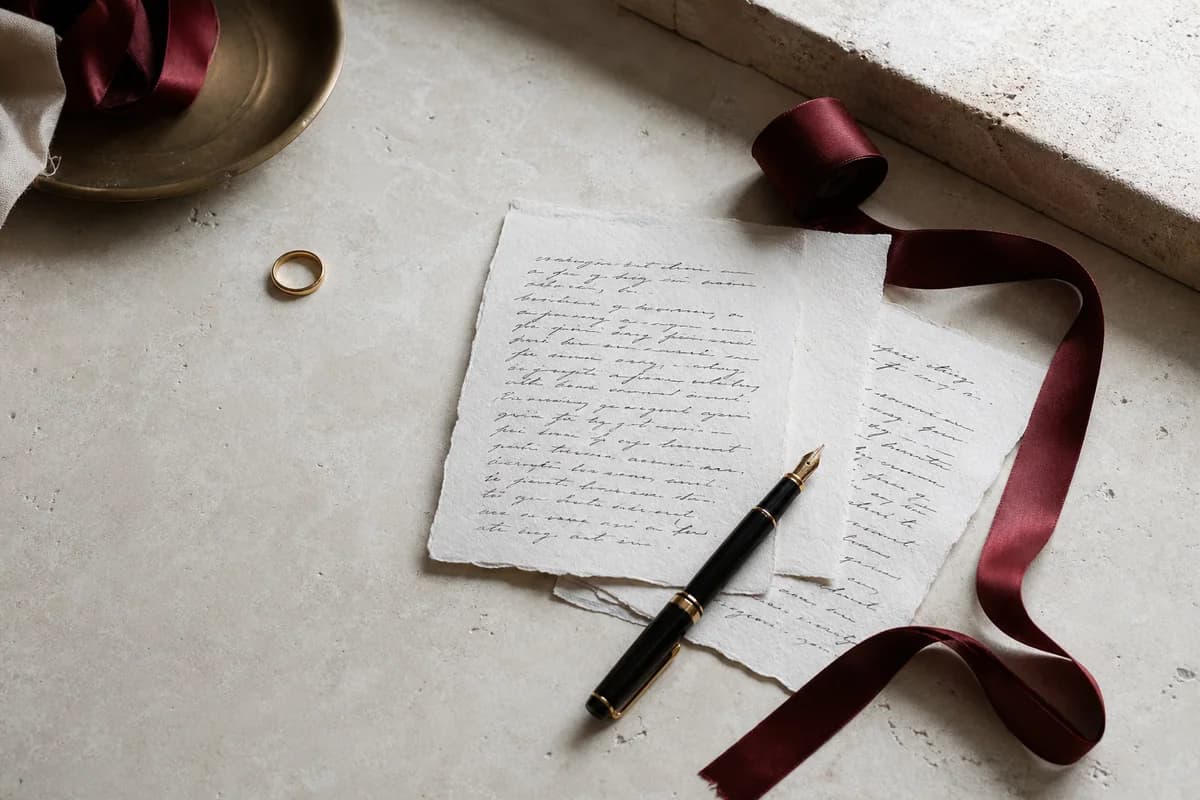
How to Write Wedding Vows
Use this Vows on Wedding framework to turn memories and commitments into personal promises with an outline, editing checklist, and ceremony-ready example.
Wedding Vow Examples by Tone
Compare Vows on Wedding examples for romantic, modern, simple, playful, and second-marriage tones, then adapt the structure to your relationship.
How Long Should Wedding Vows Be?
How long should wedding vows be? Use clear timing and word-count ranges, plus a practical method for balancing both partners’ promises.
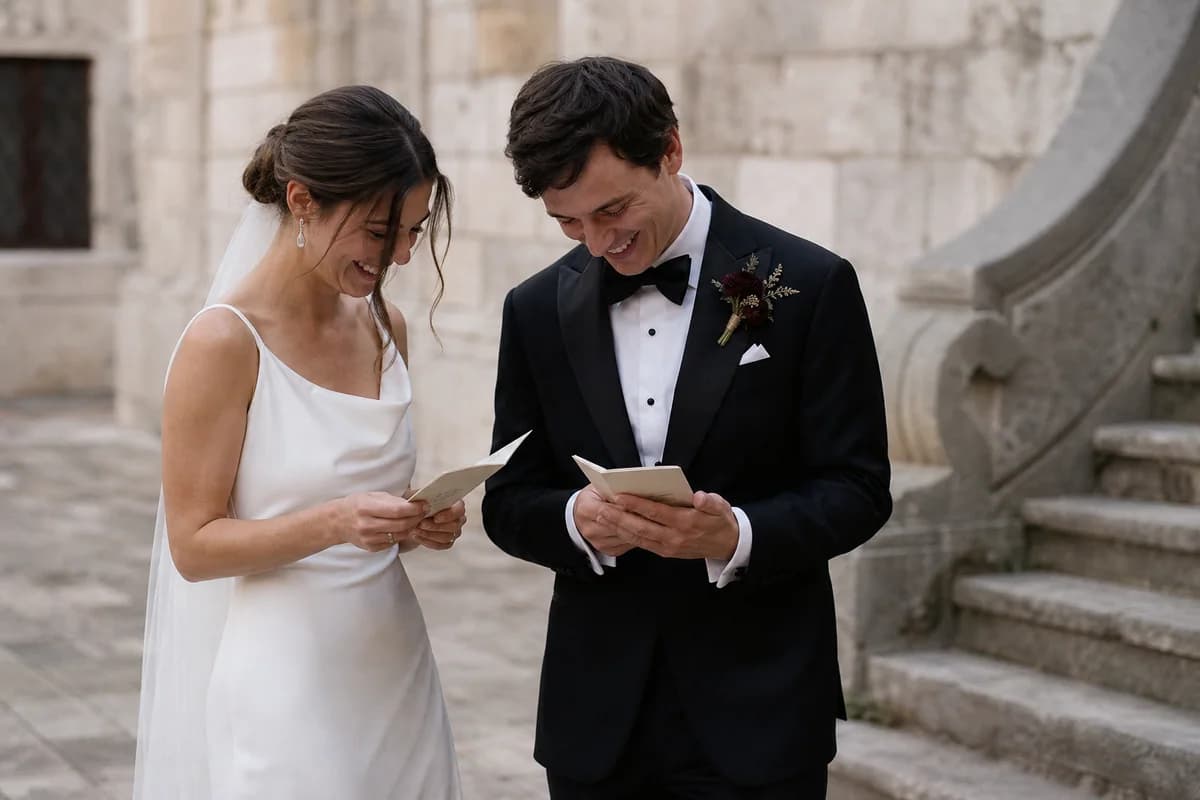
Funny Wedding Vows: Examples
Write funny Vows on Wedding that still feel sincere, using safe joke patterns, boundaries to discuss, and balanced ceremony-ready examples.
vows on wedding frequently asked questions
What should wedding vows include?
Most personal vows work well with an opening statement, one short relationship memory, three to five specific promises, and a closing commitment.
Can we write our vows separately?
Yes. Agree on tone, approximate length, and whether humor or sensitive stories are welcome, then write the actual words separately.
Is it acceptable to use wedding vow examples?
Examples are useful for structure and tone. Replace their memories, descriptions, and promises with details that could only belong to your relationship.